

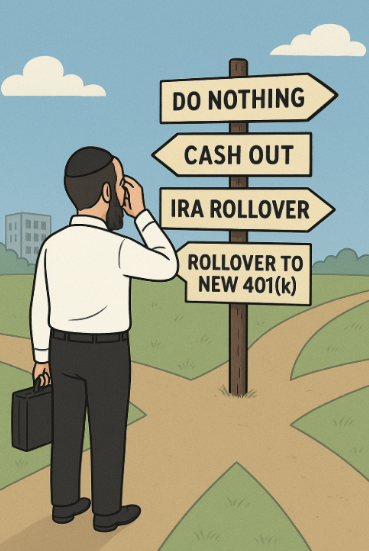
Leaving a job raises plenty of questions, but one that trips up many is: What happens to my 401(k)? Some get worried that when they leave the company, their retirement savings will get pilfered. It won’t.
But more often, people take the “out of sight, out of mind” approach to their retirement accounts. While ignoring finances is the easiest short-term choice, it’s never the best one. A 401(k) account left behind isn’t going anywhere anytime soon, for better or worse.
Don’t Panic
Employees who leave 401(k) accounts behind don’t need to panic. 401(k) plans are protected by legal barriers, including independent custodians and fidelity bonds, so losses through theft or confiscation are very rare. And these protections extend to current and former employees. While an employee leaving a job will obviously not receive any more contributions from their former employer, their savings should be secure for the time being. Any investments he makes will continue to grow, and the company is obligated to inform him of any plan changes or fee adjustments. Not all companies follow every letter of the law, but the funds are generally quite safe.
Vesting Forfeit May Kick In
If a departing employee sees their 401 (k) balance shrink, it’s likely due to the forfeiture of unvested company contributions. Employer contributions often come with strings attached, the main one being that some or all of it may be forfeited back to the company if an employee leaves before a predetermined period of employment has elapsed.
It’s perhaps disappointing, but these vesting rules are generally disclosed at the onset of and throughout the use of a 401 (k) account. So, you can double-check the suns, but it’s rarely nefarious.
Either way, here are your options.
Doing Nothing
Many employees ignore and leave their 401(k) benefits with former employers for years, even decades. Most such accounts will continue functioning, unattended but largely unmolested. Typically, leaving your accumulated savings behind isn’t the end of the world, but it isn’t ideal either.
An exception to this would be if the 401(k) offers a unique investment option (a rare but possible benefit) or charges excessive fees (a common drawback). Additionally, smaller sums (under $7,000) held in a former employee’s 401(k) may be “forced out” into an IRA in the employee’s name or into a check mailed to the employee’s home. This approach can trigger taxes and early withdrawal penalties if not handled expeditiously. So shev v’al ta’aseh isn’t recommended.
Taking it Out in Cash
When an employee leaves a company with a 401(k) account, they’re supposed to get a written notice explaining their options going forward in great detail. One of these options is to take out in cash whatever the employee has accumulated (and “vested”, which is another conversation). Should the employee so select (via a form), the custodian holding onto the 401(k) account will sell any remaining investments and send them a check. It’s often tempting to just grab the money, but for several reasons, this path is often a bad idea.
Taxes, Penalties, and Paperwork
First, money cashed out of a non-Roth 401(k) plan is taxable income, which may or may not be desired at the time. Worse, withdrawals from retirement accounts made before age 59.5 are hit with an additional 10% tax penalty. To top it off, the 401(k) custodian handling the cash-out will withhold and forward to the IRS 20% of the account balance (plus any applicable state withholdings) to cover these tax obligations. This withholding may be refunded at a later date, but the process adds salt to the financial wound. Finally, money removed from retirement accounts diminishes the potential for future tax sheltering.
Rollover to a New IRA
The best course of action when leaving a company with a 401(k) balance is usually to roll it over into an IRA. This avoids any taxes and penalties while leaving the funds sheltered as they grow further. IRA accounts can be tapped penalty-free for excessive medical costs or higher education expenses (including a child’s accredited seminary or beis medrash costs).
Roll Right Away
While it’s possible to do this rollover yourself after receiving a 401(k) balance in cash, it’s easy to mess up the procedure—and if you mess up, you’ll be taxed and probably penalized. Therefore, the preferred solution for a rollover is arranging a trustee-to-trustee transfer.
The process is simple. First, open a Rollover IRA account with any brokerage company (Fidelity, Vanguard, etc.). Typically, there is no fee. Then, using a form provided by your employer, instruct the 401(k) custodian to send your 401(k) balance directly to the new IRA. Voilà! One clarification that needs to be made is whether investments held in the 401(k) can be transferred to the IRA as is. In some cases, they need to be sold first, after which the resultant cash can be deposited into the IRA. It’s generally not a big deal either way.
Roth Rollovers
This is a bit in the financial weeds for some folks, but many 401(k) plans allow for Roth contributions. Any such funds should be deposited into a corresponding Rollover Roth IRA, allowing the employee to enjoy the offer of permanent tax-free growth. When opening the IRA to receive the rollover from your 401(k) account, be sure to select the Roth rollover option.
Rolling to a New 401(k)
If the departing employee will end up working for another employer who offers 401(k) plans, they may be able to do a transfer into the new plan (either directly from the previous 401[k] to the new 401[k] or from a Rollover IRA to the new 401[k]). This maneuver is only helpful if the new plan accepts rollovers and if there’s a specific benefit motivating its use. However, most will find that they have more control and lower fees by sticking to a rollover IRA. Generally, 401(k) s are less flexible and more costly.
The Loan Conundrum
One final point you may need to address is that outstanding retirement plan loans typically become due immediately when an employee leaves their place of employment. Money borrowed from a 401(k) account is owed only to yourself, but from a tax perspective, these funds belong back in the retirement account.
Should a loan from a terminated 401(k) not be paid back by tax time (or rolled over into an IRA), the loan “offset” is treated as a withdrawal. As noted, such withdrawals are fully taxed, and there is a 10% penalty for those under the age of 59.5. Repaying the loan is clearly preferable, but it may prove difficult for someone who is leaving a job. You need to have enough cash on hand, just as you’re leaving a paying job. A conundrum.
Where’s the Guidance?
I get a lot of questions about 401(k) basics, things that should be evident to those who were given even introductory guidance. Clearly, many employees are being offered 401(k) plans, but without guidance on how to utilize them effectively. This is unfortunate because retirement plan benefits can be extremely powerful and flexible when used properly. How ironic is it that many only learn all the details of their 401(k) plans on their way out of them? Either way, no dollar should be left behind.
Want to dig deeper?
Try these related articles
Understanding 401k Investment Options